
India - Holi Festival Photo Tour - full itinerary
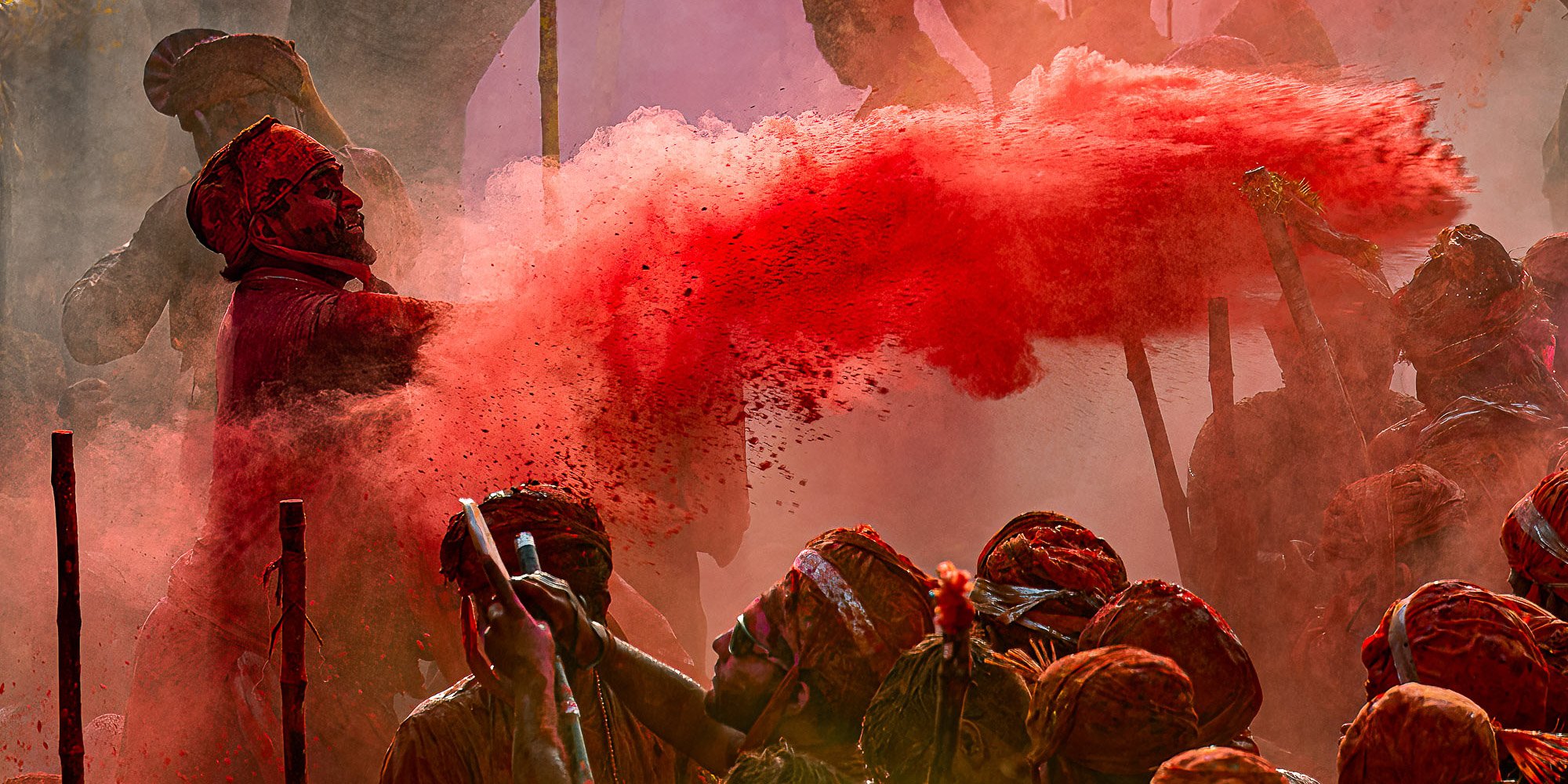
Our photographic journey through northern India captures the subcontinent's most vibrant celebration: Holi, the exuberant festival of colour and spring that transforms ancient traditions into explosive displays of joy, devotion and community spirit across Uttar Pradesh and many of Rajasthan's most historic locations.
Beginning in Barsana, we witness the unique Lathmar Holi celebrations where women playfully beat men with sticks as colours fill the air. Moving to Nandgaon and Mathura, we experience a temple invasion, a shower of water and colour, ritual “Samaj” prayers, and scenes of spiritual life along the holy Yamuna River.
We continue to Agra, where the magnificent Taj Mahal provides stunning architectural photography opportunities, before heading into Rajasthan's heritage heartland. In Karauli, we experience royal culture and traditional crafts, while Pachewar's village setting offers authentic National Holi celebrations within a historic fort's atmospheric walls.
The tour concludes with Bagru's centuries-old textile traditions and Jaipur's iconic architecture, experiencing the full spectrum of northern India's cultural heritage. From intimate portraits in Barsana's ancient lanes to explosive National Holi celebrations in Pachewar's village streets, this journey documents spring's most joyous festival.
Day 1:
Arrival in Delhi
We will arrange for you to be picked up from the airport and taken to our comfortable hotel located in the nearby Gurgaon area. There is a pre-tour meet ‘n’ greet with Nathan at the hotel starting at around 6 pm, followed by drinks and dinner with the group.
Day 2:
Delhi — Barsana
After breakfast, we head off on a drive to our hotel in Barsana, where we spend three nights. Upon arrival at the hotel, we can rest for a while, after which Nathan will hold a briefing on optimal Holi camera techniques, as well as dos and don’ts for participating in the Holi celebrations.
Next, we gear up our cameras with protective plastic covers, then we walk out of our hotel to witness the celebrations centered around the Laddu festival, where locals throw sweets at each other rather than water in preparation for Holi. From our doorstep, we can follow the action all the way to the main temple in Barsana, known as Shri Radha Rani, but depending on crowd control issues on the day, we will advise whether it’s suitable to go into the temple itself.
Day 3:
Barsana
We need plenty of energy to get through today, so we suggest everyone wakes up in their own time. After breakfast, we discuss the latest processing techniques before gearing up our cameras with protective plastic covers. We have a further briefing on dos and don’ts while participating in the Holi celebrations.
This afternoon, we enjoy the festival at the village of Barsana Lathmar – Barsana, the birthplace of Radha, Lord Krishna's beloved wife, attracts many visitors each year when it celebrates Holi. On this particular day, as part of the festival, the men of Nandgaon come to the village, intending to take over the temple of Shri Radha Rani.
The local women are reluctant to allow them to do so and resist the with bamboo sticks. Unable to strike back, the men can only splash colours on the women. The men who are caught are rather unfortunate and are forced to wear women's clothes, apply cosmetics, and dance like ladies in front of the crowd. In the evening, we head back to the hotel for dinner.
Day 4:
Barsana
Once again, we need plenty of rest and preparation time for this afternoon’s visit to the village of Nandgaon, where we will witness their own particular Holi celebrations. Today is the festival of colour, food and drink, and celebrates the end of winter and the beginning of spring, and we strategically organise our day to witness the final invasion of the temple and gather for Samaj: singing, dancing and other rituals.
Dyed water is shot from syringes, thrown from buckets and poured into balloons, which are then tossed at people. The celebrations are centred on the changing balance of power between the male (embodied in Krishna) and the female (represented by Radha). They are liberally sprinkled with perfumes, saffron water, kesudo, and covered in sandalwood as well as white and pink powder, abir and gulal.
By the end of the afternoon, we will have reached our unique vantage point from which we witness one of the unforgettable highlights of the tour — the vibrant Samaj rituals, where a large group of men, their bodies drenched in vivid, multicolored powders and paints, gather together to chant enchanting Krishna prayers. The air is truly alive with energy, devotion, and the joyful spirit of Holi.
Day 5:
Barsana — Mathura
After breakfast, we begin our drive to Vrindavan, passing through the peaceful rural landscapes of Uttar Pradesh. The route takes us past small villages where daily life unfolds, colourful roadside shrines adorned with marigolds, and green fields where farmers work with oxen and simple tools.
This afternoon promises to be a wonderful photography adventure, as we drive the short distance to Mathura. Mathura’s vibrant street life offers incredible opportunities for authentic, candid shots. The afternoon timing works well too, as we explore old Mathura’s back streets, discovering lively markets, colourful temples, riverside ghats, and local shops brimming with Uttar Pradesh character.
We catch the beautiful warm light filtering through the bustling marketplace atmosphere. The mix of vegetable vendors arranging their colourful produce, chai walas brewing tea with practiced movements, and the general flow of daily life give us very rich subject matter. Street photography in such places often captures genuine, unguarded moments that tell real stories, and the bustling scenes, vibrant colours, and rich textures here offer wonderful photo opportunities at every turn.
A few considerations that might enhance your shoot: the interplay of light and shadow in narrow streets can create dramatic compositions, and the steam from chai stalls adds wonderful atmospheric elements. The textures and colours of fresh vegetables, the weathered hands of vendors, and the expressions of people going about their daily routines all make for compelling images.
Before sunset, we take to boats on the Yamuna river to get the best view of devotees making private Poojas on temple ghats.
Day 6:
Mathura — Agra
This morning promises to be a wonderful and spiritually enriching sunrise, and our early-morning visit to the Vrindavan ghats will give you a beautiful and authentic experience of Hindu devotional practices. Watching the pilgrims perform Surya Namaskar (sun salutation) from the boat is particularly special - there’s something deeply moving about witnessing this ancient practice as the day begins.
We spend around an hour here before returning to the hotel for breakfast. After packing our bags, we drive to Agra, where upon arrival we check in and enjoy lunch with the group. Later in the afternoon, we visit Sadar Bazaar and Kinari Bazaar, each of which offers a fascinating range of rich visual stories, making for compelling visual compositions. The vibrant textures, vivid colours, and lively human interactions in these bustling traditional markets are often pure gold for photographers seeking authentic moments.
We also visit Agra Fort which is a magnificent complement to the Taj Mahal experience. The red sandstone walls and intricate Mughal architectural details create the most beautiful play of light and shadow throughout the day. Having that vantage point to photograph the Taj Mahal from a different perspective creates the kind of photographic opportunities that really sets travel photography apart from the typical postcard angles.
Day 7:
Agra
The Taj Mahal is a white marble mausoleum in Agra, India, built by Mughal emperor Shah Jahan for his wife Mumtaz Mahal who died in 1631. Completed around 1653, this UNESCO World Heritage Site features intricate Islamic architecture with a central dome, four minarets, and beautiful gardens, symbolising eternal love.
Getting to the Taj Mahal much before sunrise is strategic - we not only get first entry but also experience the monument in the beautiful early morning light when it’s less crowded, and the marble has a magical glow. We also hope to get you onto a small boat to get a highly sought-after, unique angle. Late afternoon, we visit an industrial railway station where the cargo is hand-loaded into either whare houses or waiting lorries.
As evening approaches, we visit Mehtab Bagh in an act of perfect timing - this Mughal garden offers one of the most stunning sunset views of the Taj Mahal across the Yamuna River. The soft evening light creates an almost ethereal view of the monument, and it’s often less crowded than the main Taj Mahal complex, giving you a peaceful moment to appreciate this wonder of the world.
Later we retire to our hotel for dinner and a good night’s rest.
Day 8:
Agrai — Karauli
After breakfast, we set off for Karauli, a delightful heritage town in Rajasthan that offers an authentic glimpse of royal culture, far from the usual tourist crowds. Set beside the River Bhadrawati, Karauli is renowned for its striking architecture, ornate temples, and rich history, which combine to create an ideal setting for unique and rewarding photography.
On arrival, we check into our charming palace hotel, a living piece of history. Later in the afternoon, we take a leisurely walk through less glamorous streets towards the magnificent city palace, passing through quiet lanes where discreet street shops, local vendors, and skilled artisans reveal the town’s timeless character. Our visit to the city palace includes a private local dance performance and the opportunity to witness the serene evening arti ceremony, a truly atmospheric experience. We return for dinner and an overnight stay at our historic hotel.
Day 9:
Karauli — Pachewar
After breakfast, we embark on a five-hour drive to Pachewar, a peaceful rural town offering a refreshing contrast to India’s bustling cities. Along the way, we pass through quiet villages, open farmland, and stretches of arid countryside dotted with small temples and colourful roadside life, providing occasional opportunities for spontaneous photography.
On arrival, we check into the 350-year-old Fort Pachewar, now a welcoming heritage hotel that beautifully reflects Rajasthan’s royal past. The fort’s atmospheric courtyards, grand gateways, and rooftop terraces offer wonderful settings for relaxation and photography. With two nights here, we have ample time to explore Pachewar’s charming village streets and observe daily life at an unhurried pace around its central water reservoir.
Day 10:
Pachewar
Today is the main Holi festival across India, and Pachewar’s intimate setting makes it a particularly special place to experience it. We spend the morning wandering through the village lanes, where families celebrate outside their homes with bursts of vibrant color, music, and laughter. The friendly, small-town atmosphere offers countless opportunities for authentic, respectful photography.
Later in the morning, we return to the fort for a more controlled Holi experience within its walls. We provide select villagers ( around 50) with paint, music and drinks; a perfectly contained scenario to enjoy the festival’s joy and colour in a relaxed and safe environment, ideal for capturing striking images. As evening falls, we can unwind on the fort’s terraces, reflecting on the day’s vivid memories.
Day 11:
Pachewar — Bagru — Jaipur
After an early breakfast, we set off for Bagru, a village famed for its centuries-old tradition of block printing. En route, we stop at a nearby Gypsy village which gives us a fascinating insight into another vibrant community.
In Bagru, we witness the entire printing process, from carving wooden blocks by hand to the careful stamping of fabric, followed by washing, dyeing, and drying in the open air, resulting in beautiful, intricate textiles. We also visit small family-run workshops where artisans continue this rich craft using age-old techniques, offering excellent opportunities for close-up photography of their skilled work.
Later, we continue to Jaipur, where a short afternoon walk through the lively bazaar leads us to a rooftop cafe opposite the iconic Hawa Mahal, a perfect spot to end the day and the tour.
Day 12:
Delhi
We take an early morning flight back to Delhi, from where you can transfer for your flight back home, unless of course you’re planning to spend a few more days in India (which we can help arrange for you if you so wish - please ask for further details).
We hope you will have had an enjoyable and memorable experience, and we look forward to seeing you again on another photographic adventure!
