Laos - Festival Photography Tour - full itinerary
Our tour of Laos offers a wealth of photographic opportunities, from lush landscapes to rich cultural heritage. In Vientiane, we capture the grandeur of Pha That Luang, the country's most important monument, during the nations biggest festival. Meanwhile, the karst landscapes of Vang Vieng provide dramatic backdrops for landscape photography.
The ancient city of Luang Prabang, a UNESCO World Heritage site, presents a captivating blend of traditional Lao and French colonial architecture. Early morning alms-giving ceremonies provide intimate glimpses of Buddhist traditions, while the nearby Kuang Si Falls offer stunning scenes of turquoise pools cascading through lush jungle.
Champasak, in southern Laos, showcases the magnificent Khmer ruins of Wat Phu, an ancient temple complex set against a dramatic mountain backdrop. Further south, Khone Island presents exceptional opportunities to capture the untamed beauty of the mighty Mekong River, including the thundering Khone Phapheng Falls and possible sightings of rare Irrawaddy dolphins.
Throughout the country, vibrant markets, serene temples, and the gentle pace of rural life offer endless photographic possibilities. Annual festivals provide colourful scenes of local celebrations, while Laos' unspoiled natural beauty and warm, photogenic people make it a paradise for photographers seeking authentic and diverse subjects.
Day 1:
Arrival in Vientiane
We will arrange for you to be picked up from the airport and taken to our boutique hotel in the city. Nathan runs an optional pre-tour technical workshop from around 3-5pm for those new to travel photography or who feel they would benefit from a refresher course (please confirm your interest). There’s a meet ‘n’ greet with Nathan at the hotel starting at around 6pm, followed by drinks and dinner with the group.
Day 2:
Vientiane
Vientiane offers a diverse range of photographic subjects that blend traditional Lao culture with French colonial influences. The iconic Pha That Luang, a gold-covered Buddhist stupa, stands as the city's most recognisable landmark. Its intricate architecture and golden hues provide stunning photo opportunities.
We have an early (5.30am) start this morning, to witness and partake in the daily morning ritual of ‘Tak Bat’ (giving alms to the monks), a traditional ritual still followed by the locals in Vientiane among other parts of Laos. We then have breakfast, after which we visit the local fresh market.
We have timed the tour to coincide with the That Luang festival, Vientiane's most important Buddhist festival, which is held during the full moon of the twelfth lunar month. In the afternoon, we head out to witness the That Luang festivities, a key part of which is the traditional game of ‘tikhy’ which somewhat resembles hockey. In the evening there will be a candlelit procession and firework displays to mark the end of the festival, after which we’ll enjoy dinner with the group.
Day 3:
Vientiane — Vang Vieng
After breakfast, we visit the oldest surviving temple in Vientiane, Wat Sisaket, with thousands of miniature Buddha statues, and the former royal temple of Wat Prakeo, which now serves as a museum of arts and antiques. The play of light and shadow and the unique architecture offer compelling compositions for both wide-angle and detail shots but we add more photographic interest by asking a resident monk to show us around.
Nearby is the Presidential Palace where we still get a good glimpse into the city’s colonial past. Next, we visit Wat Si Muang, one of the most popular and sacred temples in Vientiane, followed by That Dam or the ‘Black Stupa’ which is located in the heart of the city.
In the afternoon, we leave Vientiane behind via the new expressway, and transfer in around ninety minutes to the riverside town of Vang Vieng, where we enjoy the dramatic mountains and busy skies with hot-air ballons and paragliders adding extra interest as the sun sets.
Day 4:
Vang Vieng
This morning we have an option to take a sunrise hot air balloon ride, providing breathtaking aerial views of the landscape. The patchwork of rice paddies, meandering river, and mist-shrouded mountains create an unforgettable panorama.
Those who prefer not to join the balloon ride can use the same take-off point to photograph the balloons against the surrounding lime karst mountains. The karst mountains provide a dramatic backdrop, their jagged silhouettes particularly striking during sunrise.
After landing we visit local Blue Lagoons creating mirror-like compositions and opportunities for long-exposure shots. Before driving back through local minority villages and local paddy fields hopefully in the harvest season.
We have free time until after lunch, when we head north out of town to an ethnic Khmu village called Ban Viengsamai. Here we are welcomed into a local home to meet the friendly family and to learn about Khmu customs and traditions, including animism. We are welcome to take photos of the family, home and village. Next, we take an exploratory walk around the village, visiting the local knifesmith who uses traditional techniques to create knives.
We continue our explorations and trek through the picturesque rice paddies to a cave on the other side of the Nam Song River, passing by farmers working on the fields. On the way, we take a rest in one of the local rice huts while learning more about the importance of agriculture in Laos. We then trek back to the family’s home, where the lady of the house will show us how she prepares local rice wine, known as Lao Hai. We enjoy a traditional dinner of Khmu specialities together with the family and try the local rice wine if we like.
Afterwards, we say goodbye to the family and transfer back to Vang Vieng. As day turns to night, the town's vibrant scene comes alive, offering chances to capture the energy of the riverside bars and restaurants.
Day 5:
Vang Vieng — Oudomxay
After breakfast, our guide and driver collect us and take us to the station for the train journey to Oudomxay in the northern part of the country. The rail service began operations in December 2021 and we expect a comfortable journey in the first class carriage. En route, we can take in the village life and views as the train cuts straight through spectacular mountain scenery, crossing numerous bridges and tunnels along the way. Upon arrival at Oudomxay train station, our guide and driver meet us and transfer us to our accommodation, located in an idyllic natural setting.
Oudomxay province offers a wealth of opportunities to capture the essence of rural Laos and its ethnic diversity. The provincial capital, Muang Xay, serves as a gateway to explore the region's natural beauty and cultural richness. Morning visits to the bustling markets reveal vibrant scenes of daily life, where ethnic minorities in traditional dress sell colourful produce and handcrafted goods.
In the afternoon, we head out for a guided walk with a local biodiversity specialist through the lush Nam Kat Forest and use netted suspension bridges to visita waterfall offering wonderful photo opportunities. Later we head back to the resort and visit the Nam Kat Biodiversity Museum with its fascinating displays of insects, butterflies, and reptiles.
Day 6:
Oudomxay and Ethnic Villages
This morning, we set off by 4WD to visit a few villages of the Ikho, Hmong and Khamu people, who represent three of the many ethnic groups in Laos. We first transfer to Muang La, then we continue up into the hills. The route climbs to 1300 metres above sea level and offers some magnificent views of the stunning mountain scenery.
The first visit is at a Akha village, inhabited by an ethnic group originating from Tibet and Yunnan Province in China. We can walk around and learn how the villagers still follow customs that have been passed down through centuries. We then take a picnic lunch, enjoying the beautiful surroundings before back-traking into the mountains to an isolated Hmong village. Here we meet a blacksmith and are invited into local family homes.
The surrounding landscapes present stunning vistas throughout the changing seasons. Rolling hills covered in lush forests create a patchwork of greens year-round, while terraced rice fields shift from mirror-like waters in planting season to golden waves at harvest time. Dawn mists clinging to valley floors and storm clouds provide endless compositional possibilities.
From the Hmong village, we then head back down to the lodge, arriving there by late afternoon.
Day 7:
Nam Kat — Oudomxay — Luang Prabang
This morning, after breakfast we visit some local Khamu people in their homes cooking sticky rice and thrashing rice.
We then head back to Muang Xai. The town gives a real sense of life in Northern Laos, where traditional culture meets modern influences from the local Chinese community that adds an interesting cultural mix. We visit Wat Phu That, a hilltop temple where a short walk rewards you with panoramic views of the town and surrounding hills.
After lunch in a local restaurant, we head to Muang Xai train station for our one-hour train journey to Luang Prabang. Upon arrival at Luang Prabang train station, our guide and driver meet us and transfer us to our boutique hotel. Luang Prabang, a UNESCO World Heritage site, offers a treasure trove of visual delights. The architecture blends traditional Lao and French colonial styles, creating stunning streetscapes.
Later this afternoon, we transfer to the peninsula boat landing, where we board a private boat for a cruise up the mighty Mekong river, enjoying the tranquil countryside and hopefully an array of interesting subjects to photograph. We then return downstream, stopping en route at Wat Done Khoun, a unique temple set on an island in the Mekong, before continuing by boat to Luang Prabang where we arrive in the early evening, with the sun setting behind the mountains.
Day 8:
Luang Prabang
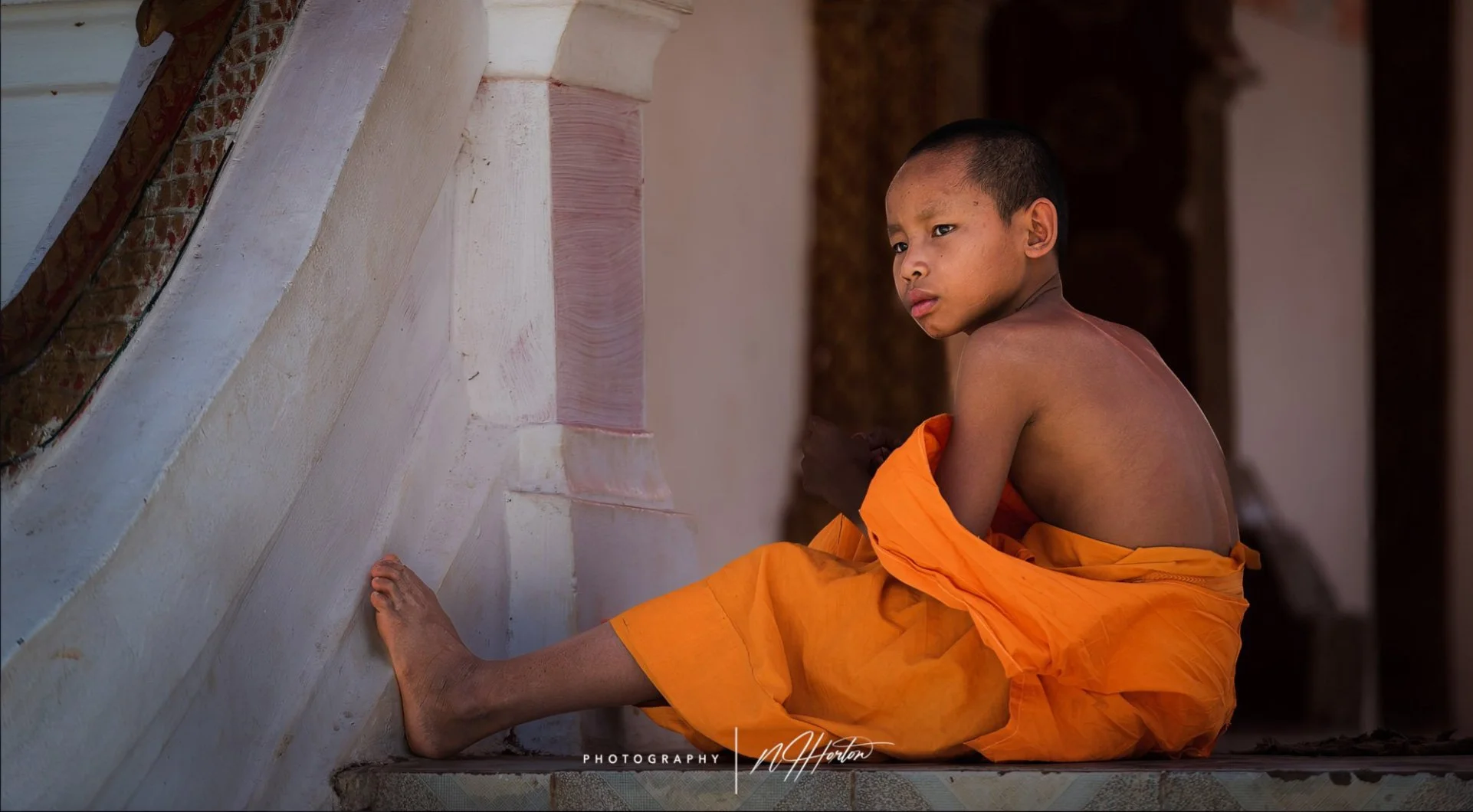
We have an early (5.30 am) start today, once again to witness and partake in the daily morning ritual of ‘Tak Bat’. Dawn brings the opportunity to capture the daily alms-giving ceremony, where saffron-robed monks receive offerings from locals, creating a serene spectacle. We return to the hotel for breakfast, after which we visit the local fresh market to see how the locals shop.
In the afternoon, we enjoy an extensive tour of the city, starting with a walk down the peninsula to the historical Heuan Chan Heritage House, taking in its architectural charms. The Royal Palace Museum and numerous temples provide rich subjects for architectural and cultural photography. Their intricate details, golden facades, and peaceful courtyards offer endless compositions.
We visit the unique Wat Mai, with its five-tiered roof, and then head to Wat Xieng Thong. With its roof sweeping low towards the ground, this temple’s architecture represents the classical Luang Prabang style. We wander the temple grounds before heading to Wat Khili where the charming traditional library building houses a historic photo exhibition of Buddhist heritage.
Next, we visit Wat Visoun, known as ‘The Water Melon Stupa’ due to its shape. Later in the afternoon, we climb Mount Phousi, offering a spectacular sunset and a panoramic view over Luang Prabang and the Mekong river. We complete our day with an exploration of the famous Night Market, which transforms the main street into a vibrant tapestry of local crafts and bustling activity, perfect for capturing the energy of local life
Day 9:
Luang Prabang — Kuang Si — Pak Ou — Luang Prabang
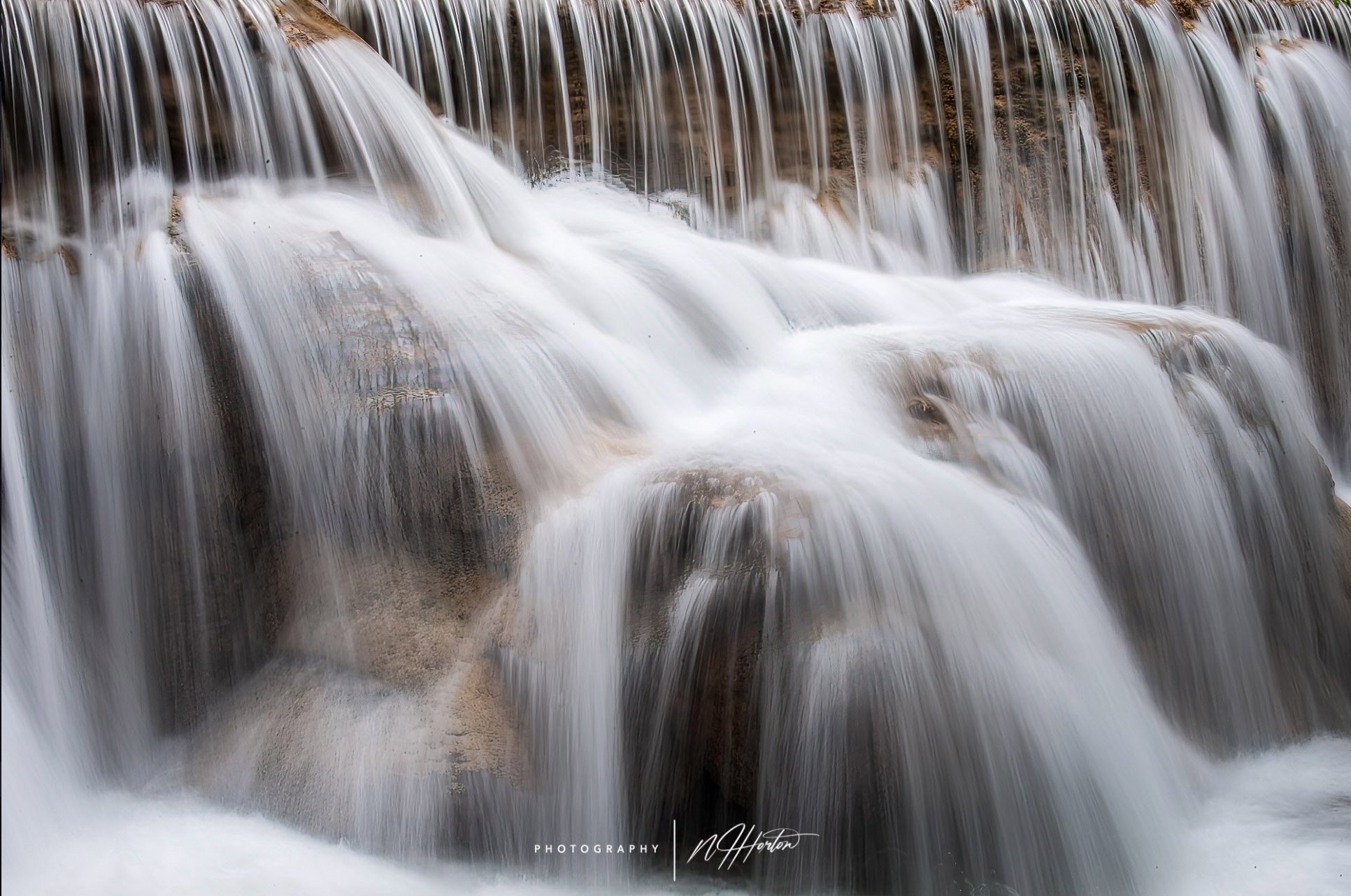
This morning, we make a return visit to watch the almsgiving, and Nathan will pick out a secluded spot that few tourists get to see. We then take a picnic breakfast and transfer to Kuang Si Waterfall, one of Asia’s most photogenic waterfalls, where we can cool off with a refreshing swim in the turquoise pool or walk along the forest trails. The multi-tiered falls, with turquoise pools set against lush jungle, offer breathtaking landscape opportunities.
On the way back we will have time to stop at a hilltribe village that is a bit touristy but we will make it work for some good portraits.
We return to Luang Prabang by midday, then in the afternoon we take another cruise on the river, this time to the mysterious Pak Ou, two caves set in a limestone cliff facing the Mekong. Crammed with thousands of Buddha statues of various shapes and sizes, they provide unique low-light photography challenges and a spiritual atmosphere. We return to Luang Prabang just as the sun is setting and we use the boats in the port as foreground interest.
Day 10:
Luang Prabang — Don Kho — Champasak
Early this morning, we head to the airport for our flight to Pakse. We drive to town, stopping en route at a local market that specialises in grilled chicken and arriving in the city around lunchtime. From there we continue south to Champasak, arriving mid-afternoon, and have time to explore this small, charming town’s fading colonial architecture.
Located alongside the Mekong River, the historic town reveals a fascinating blend of traditional life and colonial heritage. Fading French villas stand alongside ornate Buddhist temples, while wooden houses on stilts line the riverbank.
Photographers can document the gentle rhythm of riverside life, from monks collecting alms at dawn to elderly residents gossiping on their weathered wooden verandas. The town's quiet streets offer atmospheric shots of peeling colonial shutters, temple roofs glinting in the sunlight, and traditional wooden boats moored along the shore.
Day 11:
Champasak
We wake up early this morning and leave the hotel at 5.30am for a unique visit to Wat Phou, a UNESCO World Heritage site which is ancient Khmer religious complex dating back to the 5th century. This dramatically sited temple, with its weathered stone structures, intricate carvings, and dramatic hilltop setting provides wonderful compositions and offers a stunning sunrise view, and at this time of the morning it will be deserted.
We return to our hotel by around 8am for breakfast, after which we can take a well-deserved rest. After lunch we set off to the Bolaven Plateau to photograph the spectacular waterfalls of Tad Yeuang and Tad Fan. The Bolaven Plateau, with its cooler climate and rich volcanic soil, supports numerous coffee plantations and traditional minority villages.
Along the way, we'll have opportunities to capture local minority tribes going about their daily lives and document the coffee-growing traditions that make this region famous throughout Southeast Asia.
Day 12:
Champasak — Pakse — Vientiane
We start the day before sunrise for a photo session with local fishermen on the Mekong River. This is our chance to capture the traditional technique of net throwing, silhouetted against the early morning light as mist rises from the water. The graceful arc of the nets creates dramatic compositions that showcase this timeless method of fishing.
After breakfast, Nathan runs a Lightroom session and picture review, giving us the opportunity to review our work from the tour and learn post-processing techniques that will help bring out the best in our images. We then transfer back to Pakse and, after an early lunch, we head to the airport for our afternoon flight to Vientiane. Upon arrival, we are met by our local driver and guide for the transfer to our hotel. Hopefully we have time for a last sunset shoot over the Mekong before drinks and our farewell dinner.
Day 13:
Depart from Vientiane
Today you have free time until we arrange a transfer to the airport for your flight from Vientiane.
We hope you will have had an enjoyable and memorable experience, and we look forward to seeing you again on another photographic adventure!