
Vietnam - The North Photo Tour - full itinerary
Our North Vietnam tour is a photographer's paradise, offering a mesmerizing blend of stunning landscapes, diverse ethnic cultures, ancient traditions, and vibrant city life. From the bustling streets of Hanoi to the misty mountains of Ha Giang , this region presents an array of captivating subjects for every kind of photographer.
We begin in Hanoi, where the busy Old Quarter and serene lakes provide a stark contrast of urban energy and tranquility. We then journey to the remote highlands, exploring the colorful markets of Bac Ha and Can Cau, where hill tribe gatherings offer rich cultural documentation. The journey continues to Ba Be Lake, a haven of calm waters and limestone karsts.
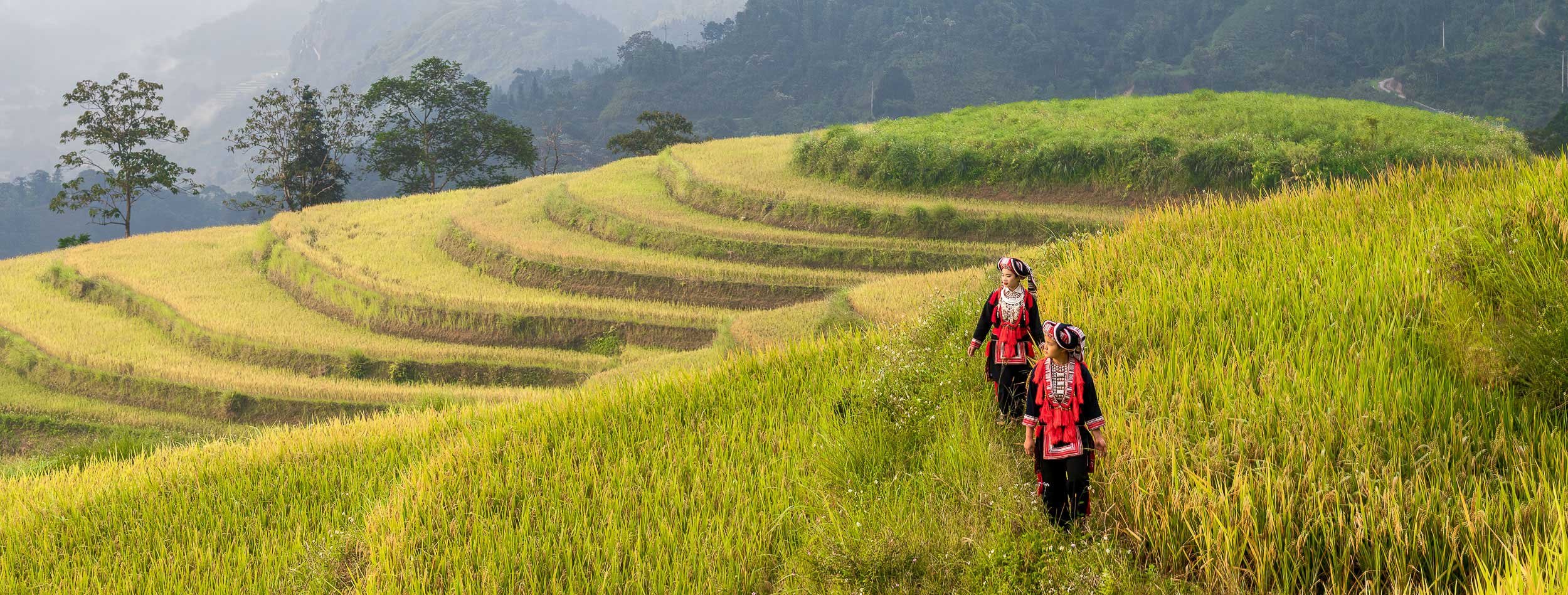
In the traditional Pan Hou and remote Hoang Su Phi villages, we capture the absolutely breathtaking beauty of magnificent terraced rice fields cascading dramatically down steep mountainsides like natural amphitheaters. The photographic tour reaches its spectacular pinnacle in rugged Ha Giang province, home to the legendary Ma Pi Leng Pass and otherworldly karst landscapes.
Throughout our journey, we encounter diverse ethnic minority groups, each preserving unique ancient traditions and wearing colourful traditional attire that tells stories of generations. From dramatic misty mountains to vibrant emerald rice terraces, from bustling authentic markets to serene villages, northern Vietnam offers photographers unparalleled visual wonders.
Day 1:
Arrival in Ha Noi
We will arrange for you to be picked up from the airport and taken to our boutique hotel located in the old quarter of the city. Nathan runs an optional pre-tour technical workshop from around 3-5 pm for those new to travel photography or who feel they would benefit from a refresher course (please confirm your interest). There will be a meet and greet with Nathan at the hotel starting at around 6 pm, followed by drinks and dinner with the group.
Day 2:
Ha Noi
This morning, we'll help you get to know Hanoi like a local. Hanoi is a quintessential Vietnamese city, full of icons (conical hats, ladies carrying baskets over their shoulders, soup vendors with plastic chairs, peddlers, etc.) you'll want to photograph. By walking through the back streets of the old quarter, we will guide you through a labyrinth of photo opportunities while you practice the art of candid street photography.
We head back to Ha Noi for lunch at the city’s famous KOTO restaurant, which serves a fabulous menu while offering the opportunity to transform the lives of impoverished young Vietnamese. After lunch, we will cross the street to the Temple of Literature. We will help bring the fabulous red doors to life by inviting some young students to pose for us.
Last but not least, we visit a street where Ha Noi’s railway tracks pass only meters from the entrances to local people’s homes. With our guide, we can walk along the tracks and take beautiful photos of the city. The day finishes with a refreshing glass of draught beer at a local bia hoi spot – a chance to mingle with the locals.
Day 3:
Hoan Kiem Lake — Lao Cai — Bac Ha
At sunrise, we head to Hoan Kiem Lake for enchanting moments and a great chance to photograph locals starting their day with tai chi, aerobics, and all manner of exotic rituals. After breakfast, we depart for the long drive to Bac Ha town, stopping en route as photographic opportunities arise.
Bac Ha, a rural district in Lao Cai province, northern Vietnam, offers diverse photographic opportunities centered around its vibrant Sunday market and picturesque landscapes. The surrounding countryside offers stunning landscape photography possibilities. Rolling hills covered in terraced rice fields create mesmerizing patterns, especially beautiful during spring planting when fields are flooded, and autumn harvest when they turn golden. Misty mornings in the valleys provide atmospheric scenes.
Bac Ha's traditional villages offer glimpses into the daily lives of ethnic minorities. Photographers can capture authentic scenes of rural life, traditional architecture, and local customs. The area's rice terraces often afford us shots of locals working hard harvesting the seasonal crop..
After checking into our hotel, we visit the former Hmong palace. Hoang A Tuong Palace, blending European and Oriental architecture, offers unique historical and architectural subjects. Set against Bac Ha's mountainous landscape, it provides an intriguing contrast between cultural influences and natural beauty. We will arrange some elderly Hmong ladies for you to photograph from within the grounds.
Day 4:
Bac Ha — Can Cau Market — Bac Ha
We meet around 6 am today and drive to Can Cau Market, a vibrant weekly gathering in Lao Cai province that offers photographers a rich tapestry of ethnic minority culture and traditional commerce. Held every Saturday, this remote market draws various hill tribe groups, particularly the Flower Hmong, known for their exceptionally colourful and intricate traditional costumes.
The market is crowded with ethnic minorities, who come every Saturday morning to trade goods from villages in the surrounding mountains, including pigs, chickens, fabrics, food, and more. Tribes who visit the market include the Flower Hmong, Black Dzao and Tay, all dressed in their colourful traditional dress.
It also provides abundant opportunities for portrait and candid photography. Visitors can capture the vivid hues of traditional clothing, the weathered faces of local traders, and the lively interactions between buyers and sellers. The diverse array of goods, from livestock and fresh produce to textiles and local delicacies, creates a visually compelling scene.
Beyond the market itself, the surrounding landscape offers stunning backdrops for environmental portraits and scenic shots. Misty mountains, terraced rice fields, and winding roads leading to the market provide context to the cultural experience and offer opportunities for landscape photography.
Early morning presents the chance to photograph the setup process and capture the soft, golden light as it illuminates the bustling scene. As the morning progresses, changing light and activity create a constantly evolving canvas for photographers to document the rich cultural heritage and daily life of Vietnam's northern highlands.
After visiting the market, we head back to the hotel in Bac Ha via a buffalo market, where we have time to take a few more photos before lunch. Around mid-afternoon, we transfer to Ban Pho village for an afternoon shoot of Mr Ho in his house and the daily life of local Hmong people working in their rice fields, and meet local people as we walk through the village. We return to the hotel after sunset, then are free to spend the rest of the evening as we wish.
Day 5:
Bac Ha — Pan Hou
This morning, before breakfast we spend an hour or so at Bac Ha’s Sunday market practically on our doorstep. The Bac Ha Sunday Market draws various ethnic minority groups, particularly the Flower Hmong known for their colorful traditional attire. This bustling market provides rich opportunities for portrait and street photography, capturing vibrant colors, traditional costumes, and lively interactions.
After breakfast, we leave for our resort in Pan Hou, Hoang Su Phi district. On the way, we see the surrounding villages with wonderful views of the rice terraces, formed hundreds of years ago by ethnic groups such as the Tay, La Chi, Dao, and Nung. Year by year, layer by layer, they built these imposing terraces, and local people still work on them today. We stop for some sunset photos on the terraces before driving to the retreat for check-in and dinner.
Day 6:
Pan Hou — Hoang Su Phi
This morning we walk through Pan Hou village. We return to the retreat for breakfast, then Nathan runs a Lightroom session. After lunch, we check out and take a short but steep drive to our lodge in Hoang Su Phi. Home to ethnic groups like the Dao, Nung, H'mong, and Red Dzao, we’ll capture authentic glimpses of traditional lifestyles, colorful clothing, and local customs.
The Red Dzao, known for their elaborate headwear and embroidery, add vibrant cultural elements to images. In the late afternoon, we are invited to visit a Red Dao family in a local village that we have gotten to know very well over the years. From there, it is just a short walk to our magnificent sunset spot.
Day 7:
Hoang Su Phi — Quan Ba
We begin our day with some sunrise shots over the stunning rice terraces with local Red Dao models. We have breakfast at the lodge, then head to Quan Ba town. The rugged terrain offers dramatic landscape photography opportunities. Mist-shrouded mountains, winding roads cut into hillsides, and pristine forests create atmospheric scenes, especially during early morning. En route, we pass through Ha Giang city and stop for a local lunch.
After lunch, we continue to Quan Ba, stopping often to photograph the rice terraces and local village life along the way. Notably, we pass a viewpoint known as Heaven’s Gate, affording a spectacular panorama of the Tam Son Valley. The valley opens wide below green rice fields and colourful flower farms, especially the Twin Hills which are set amongst immense and walled-up limestone mountains.
A little further on, we spend an hour or so walking and exploring local villages around the Quan Ba area. We make a special effort to visit the village of the Zao Ao Dai (Zao with long dresses) whose occupants live in a very traditional way in a beautiful village at the foot of the Quan Ba mountain range. We then check in at a local Hmong village resort with an infinity swimming pool and stunning mountain views, where we take time to recover after the drive. We meet again for dinner.
Day 8:
Quan Ba — Yen Minh — Dong Van
After breakfast, we head to Dong Van. Along the way, we pass through Yen Minh and enjoy the breathtaking scenery of the terraced fields, probably among the most beautiful in Vietnam. We continue driving uphill towards Dong Van, on a winding road up and down the steep mountains and with many sharp bends, but the spectacular scenery makes it worthwhile.
We see magnificent landscapes en route and visit highlights of the region, including the ancient village of Lung Cam. Lung Cam offers photographers many opportunities to capture the essence of traditional Hmong life. This picturesque village, nestled among flower fields, offers a stunning backdrop for portraits of the locals who work within them.
The village's traditional Hmong houses, with their unique architecture and Yin Yang roofs, offer compelling subjects for architectural and cultural photography; photographers can also capture beautiful portraits in hand-carved wooden doors and ancient courtyards.
Beyond its flower fields, Lung Cam is known for its hemp cultivation and textile production. Visitors can document the entire process, from growing and harvesting hemp to spinning, weaving, and dyeing fabrics. These age-old crafts, performed by skilled artisans in traditional Hmong attire, offer rich opportunities for portrait and documentary photography.
The village's daily life provides endless possibilities for candid shots. From farmers in their flower fields to children playing traditional instruments, and elders tending their bird cages, photographers can capture authentic moments that tell the story of this unique cultural enclave.
From there, we drive about 20km to Dong Van town and check in to our hotel. We can relax for an hour or so, after which Nathan takes us on a short trek up a hidden road to a nearby Hmong village, where we can take some intimate portraits. We can spend the rest of the evening at our leisure in Dong Van town, enjoying a reasonably good Italian restaurant or a drink at a bar in the local ancient market.
Day 9:
Dong Van - Meo Vac
This morning, after breakfast, we drive to the breathtaking views near the border with China. After a local walk and a coffee, we drive back to Dong Van town for lunch.
In the afternoon, we set off to Meo Vac via the Ma Pi Leng Pass, located in the Dong Van Geopark. The road along the mountainside offers spectacular scenery, and the pass is considered a unique regional heritage in terms of landscape and geomorphology. The peak area is regarded as one of the most beautiful panoramic viewpoints in the country, the “King” of Vietnam’s passes, the Great Wall of Vietnam, or the Pyramid of Meo.
Later this afternoon, we drive to the bottom of the Geopark and take a boat ride on the Nho Que River, right through the heart of one of Vietnam's most unique tectonic valleys.
Day 10 :
Meo Vac — Ba Be Lake
This morning, we leave Meo Vac and continue our journey to Ba Be Lake, a haven of calm waters and limestone karsts. It is a full day on the road, but we drive through more spectacular scenery and stop as and when photographic opportunities present themselves.
Along the way, we stop for refreshments and photograph local Tay, Nung, and Man people, adding to the range of ethnic minority groups we have photographed since leaving Hanoi.
In the late afternoon or early evening, we arrive at our resort, our base for the next two nights. We then enjoy a local village walk, a further chance for candid shots of daily life, before dinner together.
Day 11:
Ba Be National Park
The day starts from a small pier where we take a motorboat for a cruise on Ba Be Lake. The lush forest clinging to the surrounding mountains provides a colourful backdrop as we explore the lake. During the boat trip, we arrange to photograph a local fisherman casting a net from his boat, trying to catch our lunch before we head further down the lake to Dau Dang Waterfall. The scenery surrounding the lake is simply breathtaking, with the huge, old forest dominating the landscape.
We then return to a Tay village where your lunch will be cooked in a way you can photograph it at the same time, along with some very colourful local sticky rice After returning to the pier, Nathan will spend the rest of the afternoon on post-production Lightroom classes using your newly acquired portfolio of images and introduce our Photo Book Template, which we hope will be an ideal way to preserve your best work and memories.
Day 12:
Ba Be Lake — Ha Noi
We wake early and enjoy breakfast at our resort, then head out of the high hills, stopping from time to time to photograph local people, markets, and other sights along the way. We have lunch at a local restaurant, then continue to Hanoi, stopping en route to take photos of the tea plantations as we descend.
We arrive in Hanoi early in the afternoon and have the rest of the afternoon free to relax or stroll around the city’s Old Quarter. In the evening, we take a drink at our roof top bar and enjoy a meal in a local restaurant and talk about your experience.
Day 13:
Ha Noi
This morning you have free time until our driver transfers you to the airport for your flight home. Alternatively, you might want to spend a few days in Ha Noi or perhaps take a cruise around Halong Bay. If so, please let us know, and we’ll help to arrange something for you.
We hope you will have had an enjoyable and memorable experience, and we look forward to seeing you again on another photographic adventure!